

With South Africa’s ongoing energy crisis, surge protection has emerged as a vital cog in any electrical system. Despite the advantages that accompany these surge protection devices (SPDs), there are dangers that users still need to be aware of, including transient overvoltages. Electrical giant ElectroMechanica says that protection against overvoltages ensures the safety of people, goods, and equipment, as well as guaranteeing uninterrupted installation services. “Surge protection extends the equipment’s lifespan, significantly reducing electronic waste volume. Additionally, it curtails power consumption in installations, leading to cost savings and contributing to environmental sustainability,” says the team at ElectroMechanica.
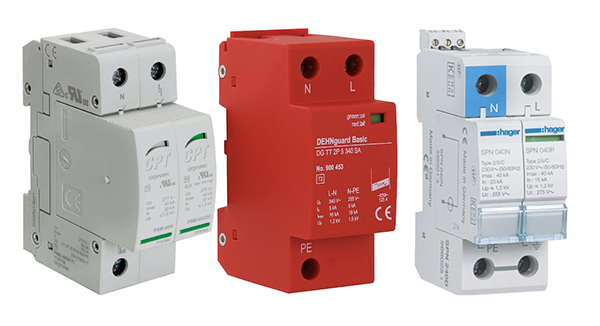
Surges are essentially overvoltages that are experienced for microseconds, and they can reach tens of kilovolts. “Their high energy content can cause serious harm to equipment connected to the electrical line. Lightning strikes, both direct and indirect, along with power restoration after outages and operation of certain electrical equipment, serve as primary sources of surges,” says the team.
Understanding SPDs
SPDs safeguard electrical equipment from the risk of surges. They are connected to the ground, placed upstream, and run in parallel with the equipment. During normal conditions, SPDs maintain a high impedance, preventing current flow to the ground. However, when an overvoltage occurs, the SPD’s impedance reduces to close to zero, allowing it to divert the surge safely to the earth, thereby protecting downstream electrical components.
To select the appropriate SPD for a system, electrical contractors and technicians must understand its key characteristics:
- In (nominal current): The peak current in 8/20us waveform the SPD can withstand
at least 20 times - Imax (maximum current): The peak current in 8/20us waveform the SPD can withstand once
- Iimp (impulse current): The peak current in 10/350us waveform the SPD can withstand once.
SPDs are categorised into three main groups
- Type 1: Designed for high-risk areas with external lightning protection systems (LPS), the Type 1 SPD is installed in incoming power supply panels, providing crucial protection against direct lightning (current) impacts. A Type 1 SPD must be accompanied by downstream Type2/Class II protectors.
- Type 2: Ideal for areas with low lightning exposure and no external LPS, the Type 2 SPD is placed downstream of Class I protectors or in incoming power supply panels.
- Type 3: Strategically positioned downstream of Type 2/Class II protection, the Type 3 SPD shields sensitive equipment or distant circuits (located more than 10m) from indirect lightning impacts, it effectively safeguards electrical systems from current and voltage surges.
The effectiveness of a surge protection system relies on the ability of SPDs to withstand the discharged current and provide a Ures level (residual voltage) lower than the Ue peak voltage that the equipment can endure. Achieving this with a single SPD is challenging, given the uncertainty of surge intensity and the induction of overvoltages when conductors exceed 10 metres. For the most effective surge protection, it is often recommended to use the following combinations of SPDs:
- Type 1+2 combination: A pure Type 1 SPD is a robust choice with a high Iimp rating, making it capable of withstanding over 100kA in special cases. However, when installing a Type 1 SPD, it is crucial to install a Type 2 SPD downstream to ensure the correct residual voltage passes through the installation during discharge. A Type 1 SPD with an Iimp rating of 12.5kA is often sufficient, making a Type 1+2 combination with tested parameters meeting Type 2 SPD standards (In, Imax) a cost-effective and optimised solution.
- Type 2+3 combination: A Type 2 SPD is paired with a Type 3 SPD to protect sensitive electrical equipment. The Type 2 SPD provides general protection for the system, while the Type 3 SPD offers additional protection for delicate components.
Enquiries: www.em.co.za
