The international Renewable Energy Agency (IRENA) suggests that the transition away from fossil fuels to renewables requires a new interpretation of the concept of energy security. This is reflected in a new report published by the agency.
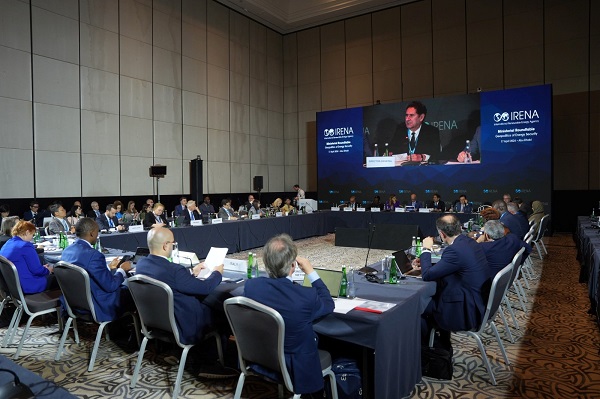
The report was released at IRENA’s 14th Assembly, in Abu Dhabi, attended by government and industry leaders from 144 countries.
Geopolitics of the energy transition: Energy security outlines a multi-dimensional energy security concept. It is based on the recognition that the systemic nature of the ongoing transition and its wide-ranging social and economic impacts warrant holistic thinking, encompassing technology and its value chains, system flexibility, climate change effects, energy demand, and human security, among other things.
IRENA Director-General, Francesco La Camera, said: “The energy system is undergoing a profound transformation, and renewables are bound to bring greater resilience through decentralisation and greater reliance on domestic sources. It is important to shape this resilience proactively with foresighted policies and investments. Although lessons from the fossil fuel era can inform some aspects of the transition, a holistic approach that considers the unique attributes of renewables and modernises economic, social, and diplomatic strategies is necessary.”
He added, “The evolving energy system calls for a security strategy that integrates environmental concerns, economic trends, and social ramifications. Technologies, not fuels, are central to the new energy system. Revisiting traditional security approaches and identifying emerging factors, this report seeks to equip policy makers with a better understanding of energy security in the era of renewables.”
IRENA’s World Energy Transitions Outlook indicates that renewables will comprise three-quarters of the global energy mix by 2050 and electricity will become the main energy carrier, meeting more than 50% of consumption by 2050. The renewables-based system is characterised by high electrification and efficiency, complemented by green hydrogen and sustainable biomass.
IRENA also estimates that 11 terawatts of installed renewable power capacity will be needed by 2030, requiring a tripling of renewable power and a doubling of energy efficiency within the intervening years, as affirmed at COP28.
As a result, major geopolitical shifts are set to influence energy trade dynamics significantly, alter international dependencies, and reshape the geopolitical landscape. Cross-border trade in electricity is expected to rise in prominence, fostering mutual benefits, in contrast to the asymmetric dependencies of the oil and gas sector.
IRENA’s new report indicates that energy security in a renewables-based era will need to evolve in several key areas.
It states that resilient technology supply chains will be essential to support the transition, for developed and developing countries. Furthermore, security and political considerations will be key to the successful deployment of the infrastructure required to support flexible renewables-based energy systems. This infrastructure will need to he highly resilient to extreme weather events, as well as cyber threats, physical attacks or, a combination of both, which gain prominence in highly electrified and digitalised systems.
The report flags human security as equally important, particularly for energy end-users, including in areas of water and food insecurity, disease, economic marginalisation, inequality and energy poverty.
In addition, the report states that energy demand, especially in Africa and Asia, has major geopolitical implications for global energy markets, trade patterns and strategic alliances. Managing demand through energy efficiency policies and investments can help mitigate competition over resources and markets.
The report also calls for climate change effects to be part of energy security considerations and indicates that renewables should be leveraged to provide cost-efficient, integrated and reliable solutions for climate adaptation.
The report is part of a series of IRENA publications examining geopolitical dimensions of the energy transition, including those arising in relation to hydrogen and critical materials.
For more information visit: www.irena.org